Daycare fit outs refer to the process of designing, building, and furnishing a childcare or early learning facility so it is safe, functional, compliant, and engaging for children. A well-executed fit out is not just about aesthetics—it directly impacts child safety, learning outcomes, staff efficiency, and regulatory approval.
Whether you are setting up a new daycare centre or renovating an existing space, a structured approach to fit outs ensures the environment meets both operational needs and childcare regulations.
What Are Daycare Fit Outs?
Daycare fit outs involve transforming an empty or existing commercial space into a fully operational childcare facility. This includes internal construction, room layout planning, safety installations, furniture setup, lighting design, flooring, play areas, and compliance upgrades.
Unlike standard commercial interiors, daycare environments must meet strict safety standards, child-friendly design principles, and regulatory requirements. Every element—from wall height to flooring material—is selected with children’s safety and development in mind.
A successful fit out balances three key factors: safety, functionality, and learning environment quality.
Importance of Professional Daycare Fit Outs
A professionally designed daycare fit out is critical because it directly affects how children interact with their environment.
Safety is the top priority. Materials, furniture, and layouts must minimize risks such as sharp edges, toxic materials, or unsafe access points. At the same time, the space must encourage exploration, learning, and social interaction.
A well-planned layout also improves staff efficiency. Educators need clear visibility across rooms, easy movement between zones, and efficient access to resources. Poor design can lead to congestion, inefficiency, and supervision challenges.
In addition, regulatory compliance is essential. Most regions require childcare facilities to meet strict building codes, hygiene standards, emergency exit requirements, and accessibility guidelines before they can operate.
Key Areas in a Daycare Fit Out
A daycare centre is typically divided into several functional zones, each designed for a specific purpose.
1. Entry and Reception Area
The reception area is the first point of contact for parents and visitors. It should be secure, welcoming, and easy to monitor. Controlled access systems are often installed to ensure only authorized individuals can enter the facility.
This area also typically includes check-in systems, storage for belongings, and administrative space for staff.
2. Learning and Activity Rooms
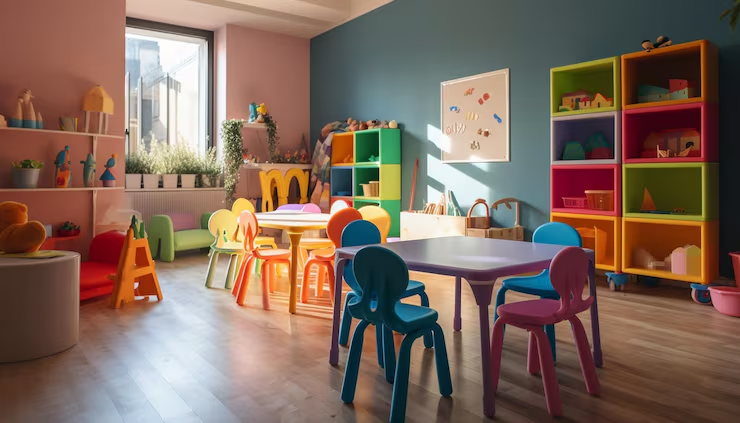
These rooms are the core of any daycare facility. They are designed to support structured learning, creative play, and group activities.
Furniture is usually child-sized, flexible, and arranged to encourage interaction. Flooring is often soft or cushioned to reduce injury risk. Natural lighting and calming color schemes are also commonly used to create a positive learning atmosphere.
3. Sleep and Rest Areas
For younger children, rest areas are essential. These spaces must be quiet, dimly lit, and separated from high-activity zones.
Proper ventilation and temperature control are important to ensure comfort and hygiene. Beds or mats are typically arranged to maximize space while maintaining individual comfort.
4. Outdoor Play Areas
Outdoor spaces are a critical part of daycare fit outs. They promote physical activity, motor skill development, and social interaction.
These areas often include soft-fall flooring, secure fencing, age-appropriate play equipment, and shaded zones. Safety is especially important here, as outdoor environments introduce additional risks.
5. Kitchen and Food Preparation Areas
If meals are provided on-site, the kitchen must meet strict hygiene and food safety standards. Layout design focuses on separation of raw and cooked food areas, easy cleaning surfaces, and safe storage systems.
In many daycare setups, food preparation is designed to be visible or partially open for transparency and safety monitoring.
6. Bathrooms and Changing Areas
These areas must be designed for frequent use and easy supervision. Child-sized fixtures, non-slip flooring, and hygienic surfaces are essential.
Proper ventilation and cleaning access are also important to maintain health standards and reduce the spread of germs.
Design Principles for Daycare Fit Outs
Designing a daycare facility requires a careful balance of creativity and compliance.
One of the most important principles is visibility. Staff must be able to supervise children easily from multiple points in the room. Open layouts and strategically placed partitions are commonly used to support this.
Another key principle is flexibility. Daycare spaces often serve multiple functions throughout the day, so furniture and layouts should be adaptable.
Safety is integrated into every design decision. Rounded furniture edges, child-safe materials, secure storage, and controlled access points are standard requirements.
Finally, the environment should support learning and development. Color psychology, natural light, and interactive elements are used to create a stimulating yet calm atmosphere.
Safety and Compliance Requirements
Safety compliance is one of the most critical aspects of daycare fit outs.
Most regulatory bodies require strict adherence to fire safety standards, emergency evacuation plans, childproof electrical fittings, and hygienic materials. Flooring must often be non-slip and impact-absorbing to reduce injury risks.
Furniture and fixtures must meet safety certification standards, and hazardous materials are strictly prohibited. Regular inspections are typically required before licensing approval is granted.
Accessibility is also important. Daycare centres must accommodate children with different needs, including ramps, accessible bathrooms, and inclusive learning spaces.
Materials Used in Daycare Fit Outs
Material selection plays a major role in safety and durability.
Walls are often finished with washable, non-toxic paint. Flooring is typically made from vinyl, rubber, or carpet tiles designed for cushioning and easy cleaning.
Furniture is made from durable, rounded, and child-safe materials such as laminated wood or molded plastic. All materials must be easy to sanitize due to high hygiene requirements.
Common Challenges in Daycare Fit Outs
One of the biggest challenges is meeting regulatory requirements while maintaining design flexibility. Compliance standards can vary depending on location, making planning complex.
Budget management is another common issue. High-quality safety materials and specialized construction can increase costs quickly.
Space limitations also present challenges, especially in urban areas where properties are not originally designed for childcare use. Efficient layout planning becomes essential in such cases.
Finally, coordinating multiple contractors—designers, builders, safety inspectors—can make project management more complex.
Cost Factors in Daycare Fit Outs
The cost of a daycare fit out depends on several factors including size, location, design complexity, and compliance requirements.
Basic fit outs may include flooring, paint, lighting, and furniture installation. More advanced setups involve custom play structures, sensory learning zones, and integrated safety systems.
Additional costs may include permits, safety certifications, outdoor play equipment, and specialized accessibility features.
While costs can vary widely, investing in quality fit out design usually reduces long-term maintenance and compliance issues.
Benefits of a Well-Planned Daycare Fit Out
A well-executed daycare fit out creates a safe, engaging, and efficient environment for both children and staff.
Children benefit from structured learning spaces that support development, creativity, and social interaction. Staff benefit from improved workflow, better supervision, and reduced stress.
For business owners, a high-quality fit out improves reputation, increases enrollment, and ensures compliance with licensing authorities.
Final Thoughts
Daycare fit outs are a critical investment in early childhood education infrastructure. They require careful planning, strict compliance, and thoughtful design to create a space that is both safe and stimulating.
A successful fit out goes beyond construction—it builds an environment where children can learn, grow, and feel secure while giving educators the tools they need to deliver high-quality care.
By focusing on safety, flexibility, and child-centered design, daycare facilities can create long-term value for families, staff, and the broader community.